Ten Years and Still Becoming: Why the Slowest Growers Build the Strongest Foundations
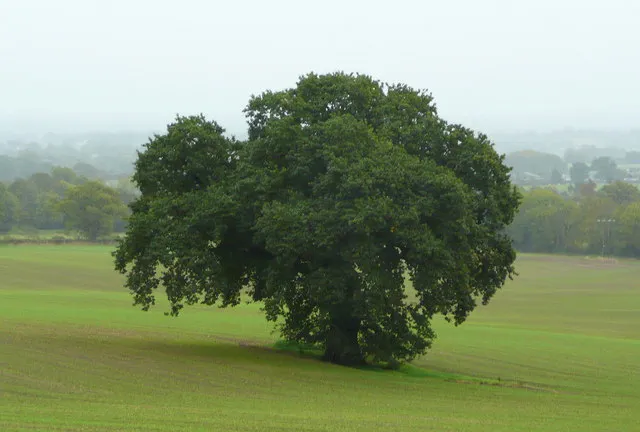
Photo: Jonathan Billinger, CC BY-SA 2.0, via Wikimedia Commons
I want to talk about the recovery content that lives in your feed. You know the genre. The 90-day transformation. The "one year ago I was broken, now look at me" carousel post. The before-and-after photos with the caption about how everything changed the moment they decided.
I'm not here to knock those stories. Some of them are true, and the people telling them earned every pixel. But I've noticed something they leave out, and I think it's quietly wrecking people: the implication that if it hasn't clicked yet—if you're still struggling in month seven, year four, whatever—maybe you're doing it wrong.
You're not doing it wrong. You might just be growing slowly. And slow, as it turns out, is underrated.
The Math Nobody Shows You
Talk to people who've genuinely rebuilt—five years out, ten years out, long enough that the change has weathered a few storms—and a pattern shows up. Very few of them had a lightning-bolt moment. Most describe something closer to erosion in reverse: years of small deposits, most of which felt pointless while they were making them.
The woman who spent eight years cycling through attempts at sobriety before one stuck, and now mentors others—she'll tell you those "failed" attempts weren't wasted. They were where she learned what didn't work, what she needed, what she couldn't skip. The man whose depression lifted for good in year six of treatment, after four medication adjustments and two therapists who weren't the right fit—he wasn't failing for six years. He was searching.
We don't post about the decade. We post about the day it finally worked. And that skews everyone's expectations of their own story.
Why Fast Might Be Overrated Anyway
Here's a heretical thought: the breakthroughs that arrive slowly tend to last longer, and there's a decent reason for that.
Fast change often rides on adrenaline—a crisis, a rock-bottom moment, a burst of white-knuckle motivation. It's real, but it's borrowed energy, and eventually the bill comes due. Slow change is different. It's built through hundreds of unremarkable repetitions: the meeting you attended when you didn't feel like it, the boundary you held for the fortieth time, the therapy appointment you kept on a day you wanted to hide.
By the time slow growth produces visible results, the results aren't sitting on top of your old life. They're load-bearing. They're made of you.
Think about how a tree actually grows. Not in a dramatic spurt that anyone can see, but in rings—invisible accumulations that only show up when you cut it open. The slowest-growing wood is the densest. Everyone knows this about trees. We just forget it applies to people.
The Timeline Was Never Real Anyway
Where did we get these numbers? Ninety days to a new you. A year to be "back." A lot of it comes from treatment program structures, insurance billing cycles, and—let's be honest—content marketing. "Transform your life in 90 days" is a great hook. "Transform your life in an unpredictable number of years through consistent unglamorous effort" doesn't fit on a thumbnail.
But your nervous system doesn't read marketing. Your grief doesn't check the calendar. The neural pathways you're rewiring took years to form, and they come apart on their own schedule, not ours.
There's also this: comparing your chapter four to someone else's chapter ten is a losing game even when the timelines are honest. And they usually aren't. The person posting their one-year miracle may be leaving out the relapse, the antidepressant, the divorce, the bad days they didn't photograph.
Keeping Coming Back Is the Whole Job
Here's what I've come to believe, and why this site is named what it's named: the people who make it aren't the ones who never fell behind. They're the ones who kept coming back.
Back to the meeting after missing a month. Back to the journal after letting it gather dust. Back to the therapist's office after ghosting for a season. Back to the honest conversation, the plan, the hope—after the last version of it collapsed.
Every return counts. Every single one. A recovery measured in returns is unbreakable in a way a streak never is, because a streak can break, but a practice of returning just... continues. There's no such thing as being too far gone to come back one more time.
So if you're reading this in year three and it still feels hard. If you're on attempt number six. If everyone else seems to have gotten their transformation and you're still slogging through Tuesdays—this is your permission slip.
You are not behind. There is no schedule. The slowest growers often build the deepest roots, and the comeback doesn't owe you—or anyone—a timeline.
Keep coming back. That's it. That's the whole secret. It always was.